Tim Lang is a Professor at City, published several books, author of Feeding Britain. This is from his lecture at Keele University Feb, 2020:
https://www.youtube.com/watch?v=U016bJppjZ0
Notes from the Lecture
“UK gets 30% of it’s food from the EU and another 11% through trade deals negotiated as a member of the EU.
Uk is 17th our of 113 countries on affordability, availability , quality and safety. (We’re the fifth richest economy).
If you add in sustainability , UK is the 24th of 67 countries (not all countries have good data on their environmental.
Does it matter?
– No: UK is rich, can buy imports.
– Yes: food imperialism, land us, sustainability
Are there opportunities to change the UK food system?
– Yes: post-Brexit politics: NFS (Eng), GFN (Scot), Rural (Wales), NI.
– No: dietary change is slow (unless in crisis)
– Yes: geo-political realities – there could be an oil crisis, US makes us a 51st state, conflicts and war
In 1939 Britain fed itself at 30%. By 1945 it produced 66% of its own food. In early 1980s Britain was at 80% self sufficiency. Since, the numbers are dropping. We get 50% from UK, 30% from EU, then 4% from Africa, North America, South America, and Asia each, 2% from rest of Europe and 1% Australisia. There are people in the cabinet that seem to think we’ll get Australisia to feed us, it’s cloud cukooland.
90% of our food comes in at Dover and the channel tunnel, by lorry and ship. Very little food comes in by air.
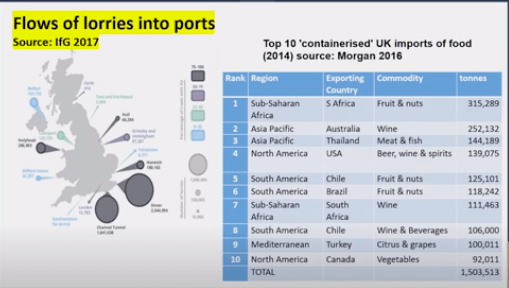
We don’t even own our ports, they’ve all been sold off. The food comes in containers, whether by ship or the tunnel, it always ends up on a lorry.
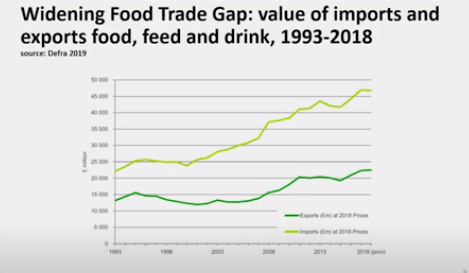
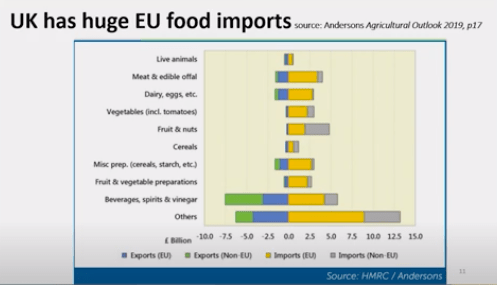
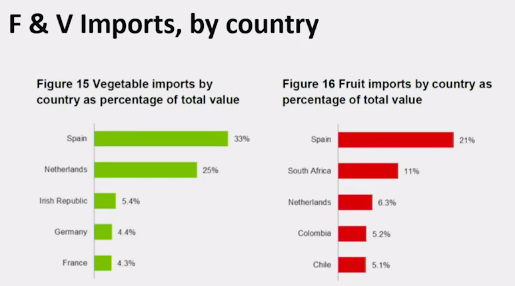
The imports are rising faster than the exports. For 35 years the UK gov of both parties have the same policy: pay for imports by selling more exports. In public health terms that means we’re importing fruit and vegetables, and selling heart disease to everyone else!
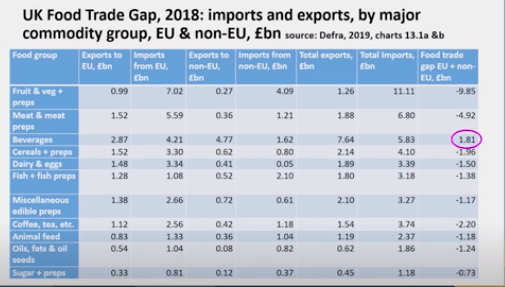
Only one of these columns is in the black, and that’s beverages, and that’s basically because of whiskey!
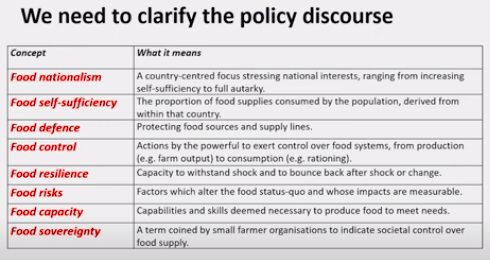
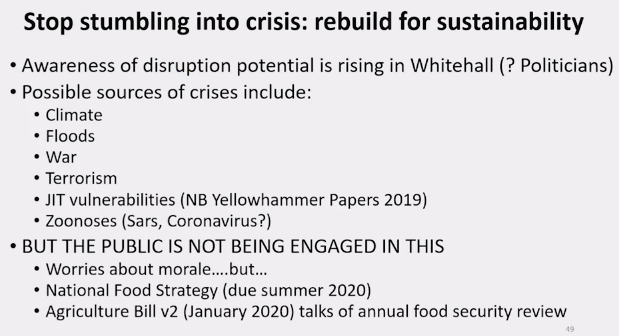
There is a National Food Strategy (July 2020) headed by Henry Dimbleby, who co-founded Leon.
We should be rationing meat already.
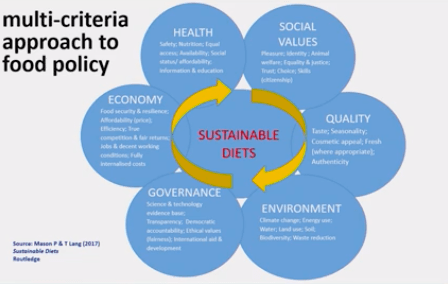
We should be looking at how many nutrients / acre, not tonnage.
People riot when there are food shortages. In 2017 Tesco had a riot over a shortage of two vegetables in the supermarket. This was kept quiet, Tescos were shocked.
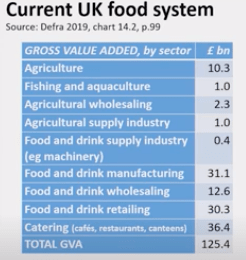
Last year UK citizens spent £225.7bn on food & drink. Fishing got not even £2b, partly because 40 years ago British fishing sold it’s own quotas (and now blames Brussels). Farming gets about 6% of the value of food, so when you go and spend money just assume about 6% of the value of what you’re giving goes to the producer. How can we expect food production to double (which is what we need) unless we pay the people who produce it?
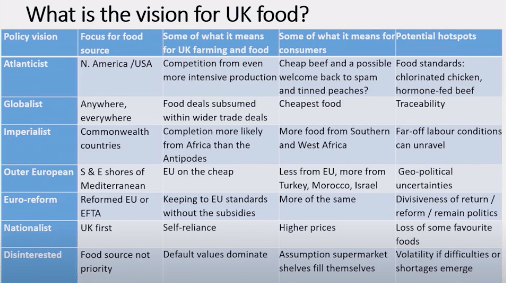
There’s a fight in the cabinet at the moment between atlanticist, globalist and imperialist.
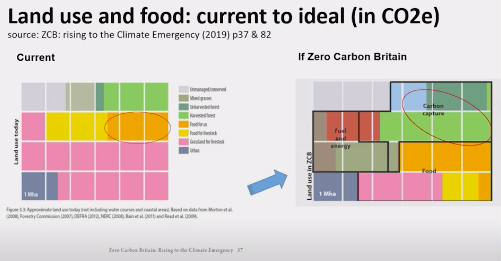
From Centre for Alternative Technology (CAT) in Wales. Orange = growing food for us, yellow = growing food for animals, pink = grassland for livestock. If we want to be zero carbon, we would have to double the orange, radically change land use and eat differently as a result. The good news is that public health will improve.
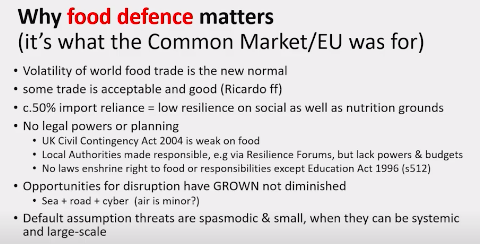
Prices outside of the common market are very volatile.
Prices of food completely correlated to oil prices: oil drives food.
Within 3-5 days there will be shortages in the food market if Brexit no-deal arrangement.
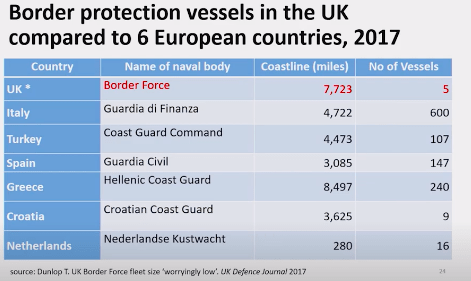
There is a very strong commitment within the cabinet for an Atlanticist Model, which means getting food from the USA. Would need a massive increase in navy to protect supply lines.
The British are eating the most processed diet of countries in EU.
50% of our diet is ‘ultra processed’ foods, high in fats, salt, sugar (makes a lot of money for manufacturers and retailers)
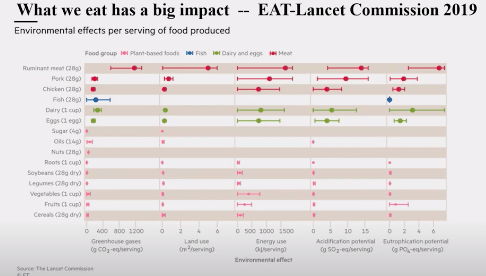
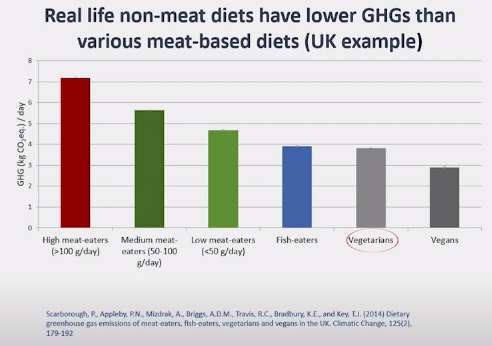
The EAT-Lancet commission (Lancet = medical journal) asked a group of experts: Can we feed a future population of 10 billion people a healthy diet within planetary boundaries? I thought the answer would be no, but the answer turned out to be yes, if we eat very differently. One of the central things that has come out of science in the last 30 years. The more we can grow plants for ourselves (and not just to feed animals which are poor energy converters and the farmers don’t make any money), the better public health gets, and the better ecosystems are. You can look after biodiversity with the land released.
I used to farm cows and pigs! I know don’t, nor do I eat them anymore.
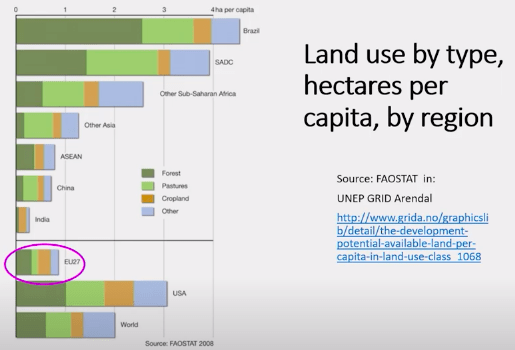
We’ve got to grow more forest and rewild green pastures.
Animals can be carbon sinks, they can be useful.
India has the biggest cattle population in the world.
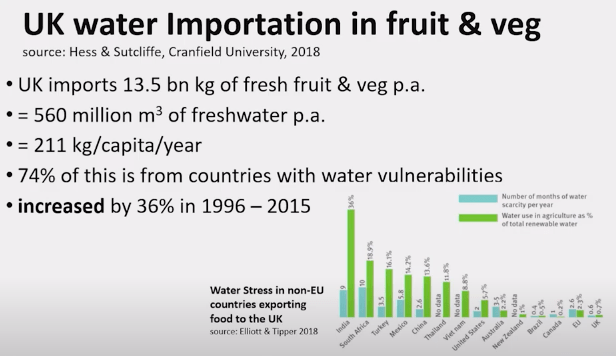
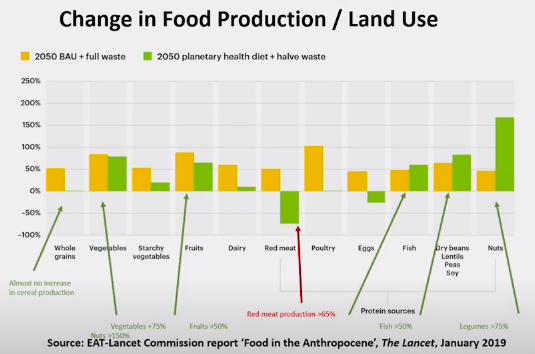
This implies a radical transformation of landuse and food production.
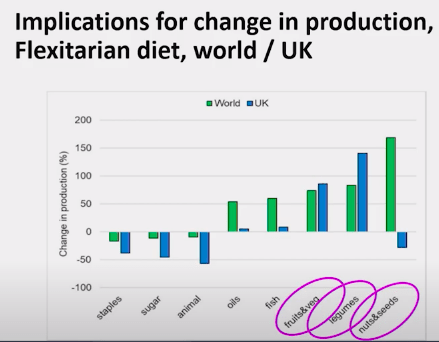
In the book I’ve done a review of Kent for personal reasons. In my view the collapse of the British nut industry is a very interesting example of what’s gone wrong. How can we rebuild codnuts and hazlenuts? It’s a labour problem.
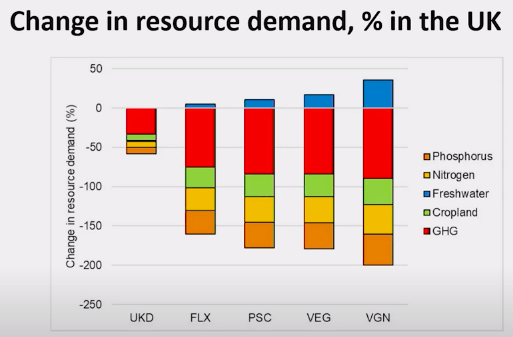
The impact will be fantastic.
If we became a flexitarian diet, there’s a dramatic reduction in resource demand from where we are today (UKD on lhs). From there, there’s small increases towards pescatarian and vegetarian. Vegan drops alot again, but the water use goes up.
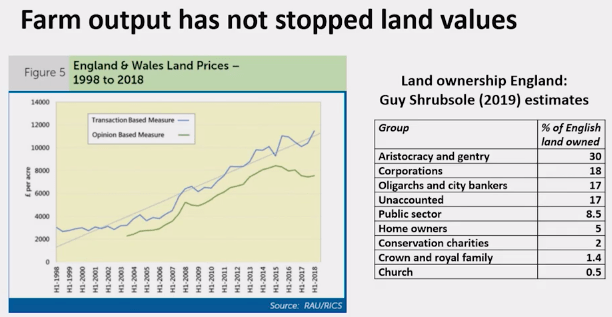
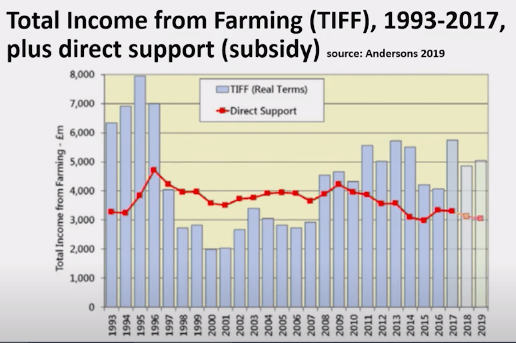
Remember farmers get about 6% of gross value added, about 9% of the total value spent by consumers
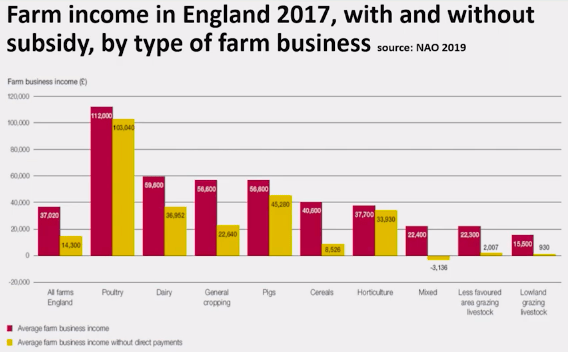
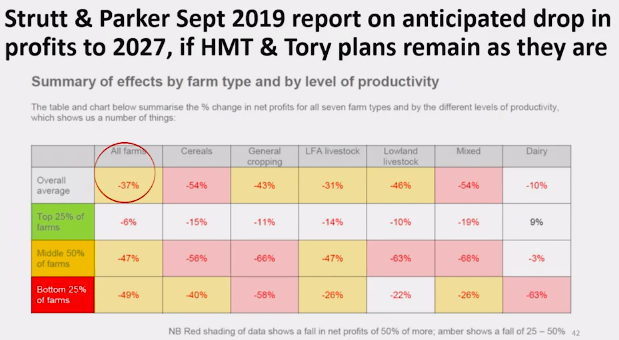
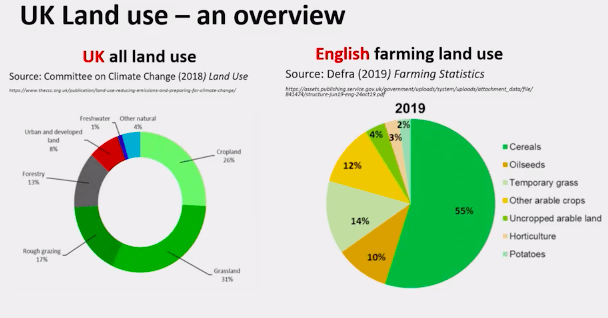
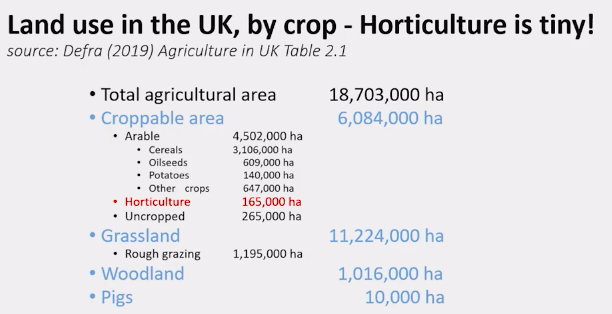
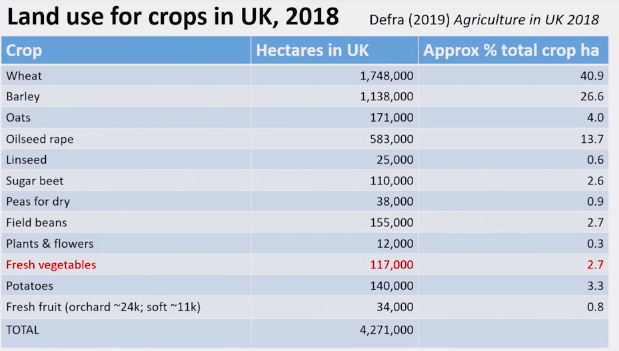
I’m a little happier about the Agriculture Bill, but it’s a little too agriculture-focused for me, we need to focus on horticulture.
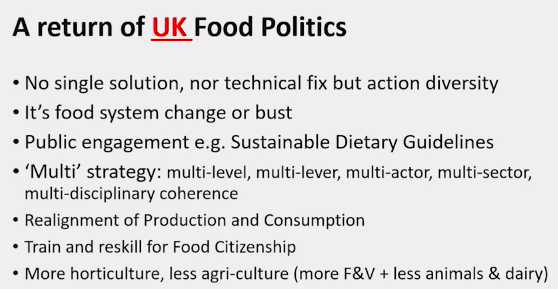
There’s no conspiracy here, we’ve got to behave, cook, shop, and use our land differently.
Britain has great scientists, great advisors, just deaf politicians and a public which is not being consulted.
 South Kent Coast Food Partnership